ALMA Vacuum Screws

Leak-Tight. Strong. Precise.

For the most demanding applications: ALMA vacuum screws are specialised fasteners for vacuum environments. Lubricant-free and optimised for low outgassing. For industry, research and analysis.

Where Are Vacuum Screws Used?

Standard screws may not meet the requirements of vacuum environments. Specialised vacuum screws address the following challenges:

Preventing virtual leaks
Conventional screws trap small volumes of gas beneath the head and within the threads. These virtual leaks extend pump-down times and compromise the ultimate vacuum. Vacuum screws provide dedicated venting paths for these cavities.

Ensuring low outgassing
Lubricants, protective waxes and contaminants release gases under vacuum. Vacuum screws are cleaned and packaged for UHV applications to keep surface-specific outgassing rates within the required limits.

Improving process reliability
In vacuum chambers, synchrotrons, electron microscopes and fusion systems, magnetisable or contaminated fasteners can interfere with measurement results. Vacuum screws are designed to meet these demanding requirements.
What Makes Vacuum Screws Special?

Every feature is tailored to the requirements of vacuum, high-vacuum and ultra-high-vacuum systems.

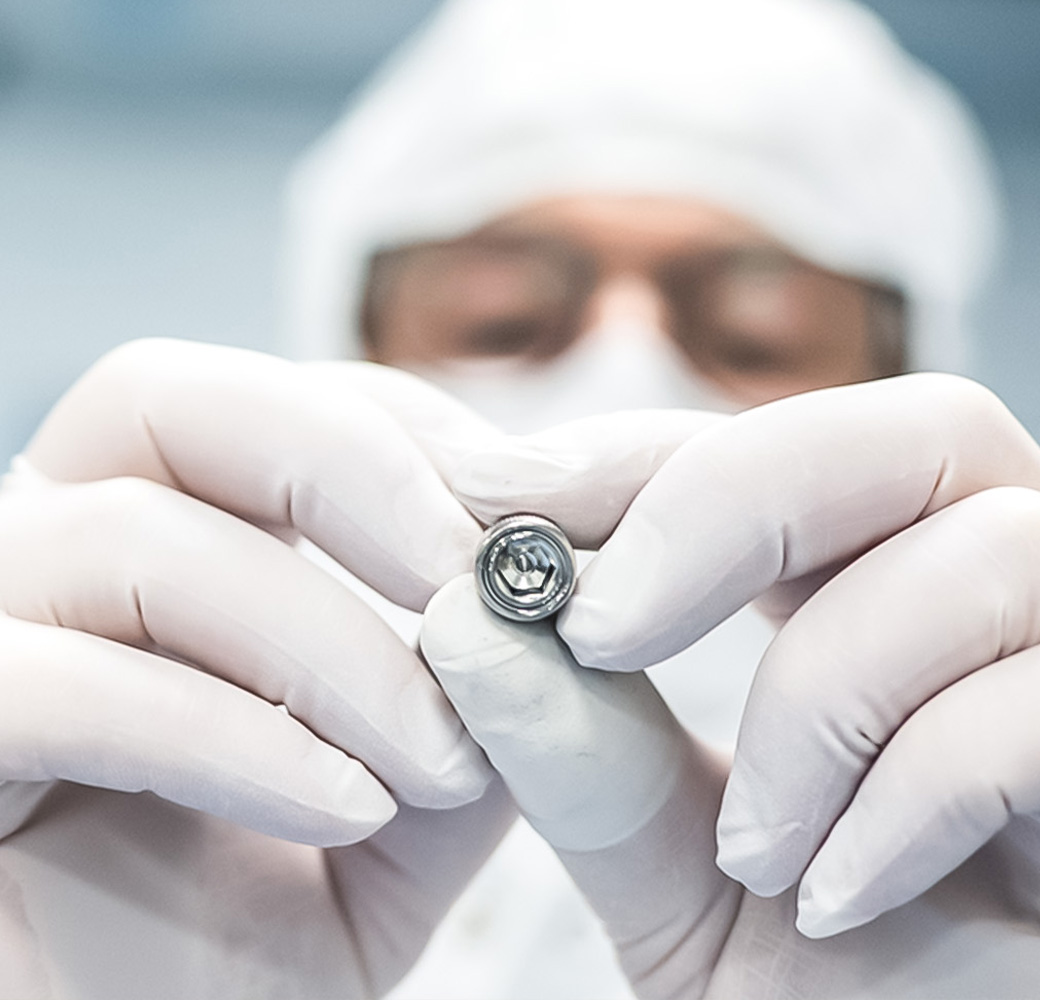
Multi-stage, ultrasonic precision cleaning. Outgassing rates below 1 × 10⁻⁹ mbar·l·s⁻¹·cm⁻² for HV and below 1 × 10⁻¹² mbar·l·s⁻¹·cm⁻² for UHV applications.

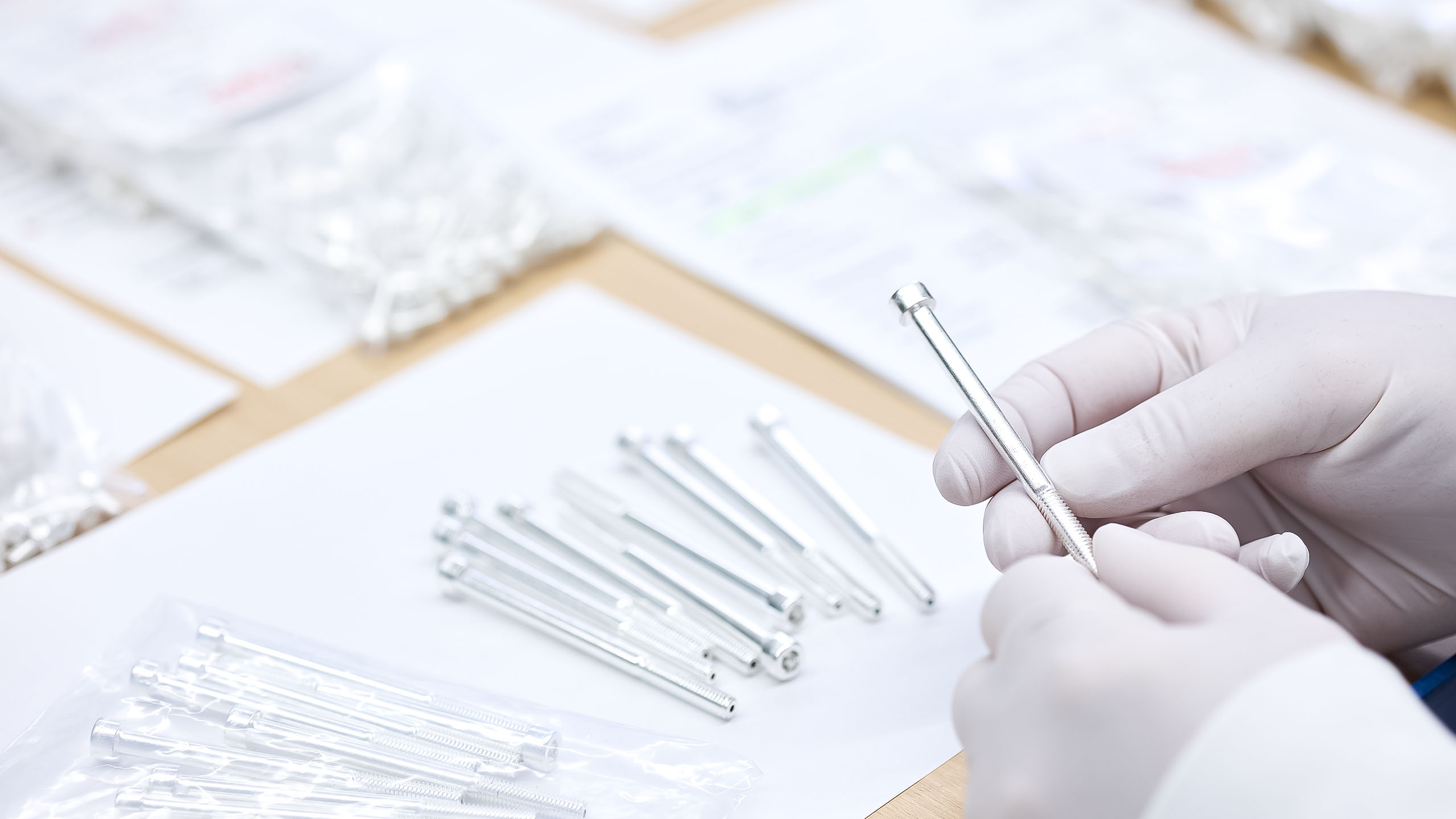
Packaged in an ISO Class 5 cleanroom, with optional double packaging to maintain cleanliness until installation.

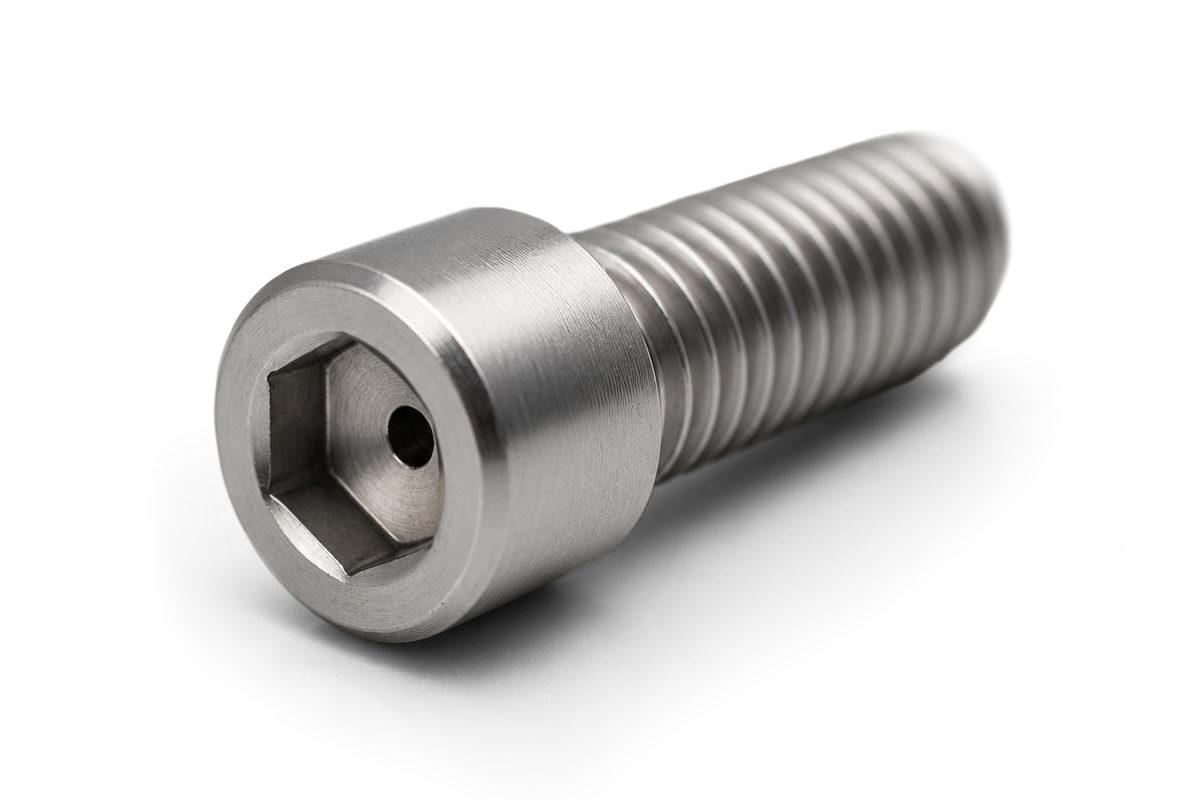
Central venting holes or longitudinal slots provide controlled release of trapped gases and prevent virtual leaks.

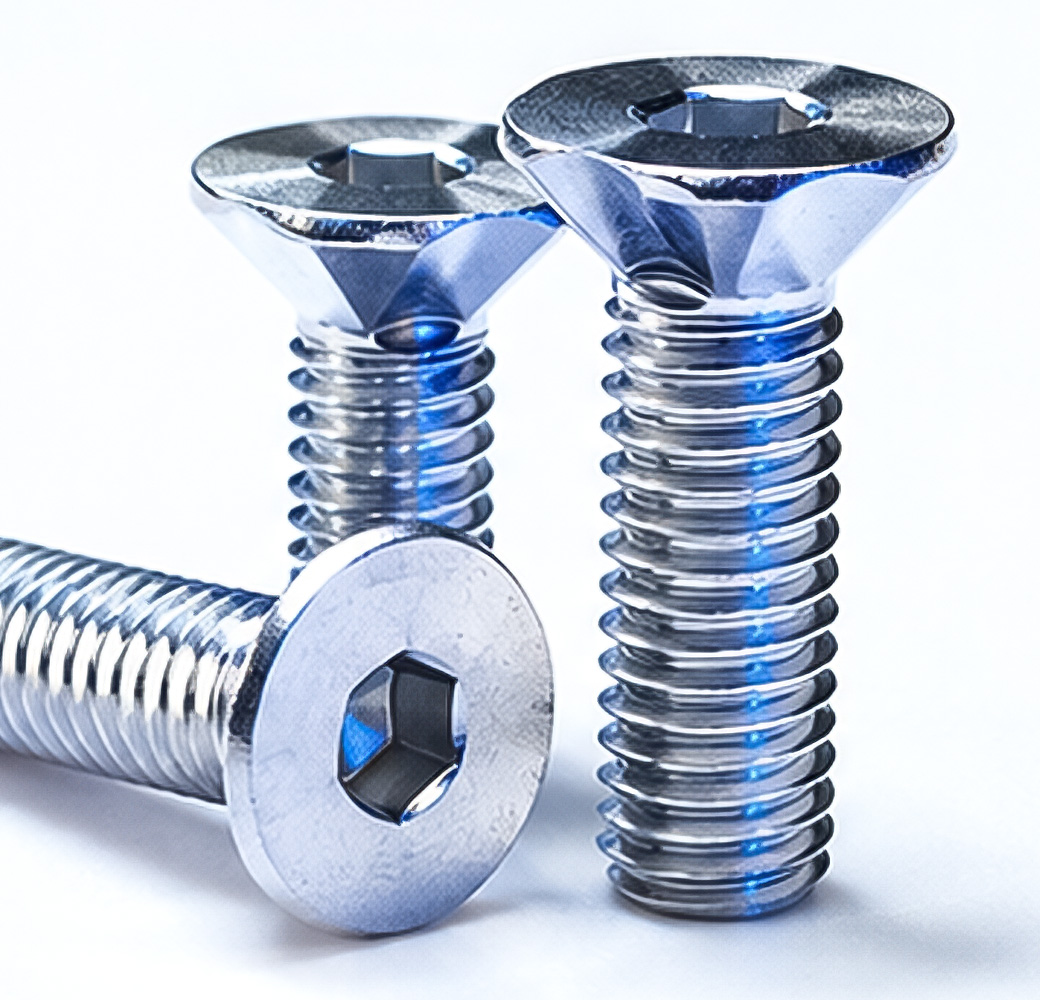
Silver or gold coatings act as a barrier between similar materials and reduce friction in the threads.

Specialised materials such as 316L with μᵣ < 1.008 or titanium for applications involving sensitive magnetic fields and analytical techniques.

Socket head cap screws, button head screws, hex head screws or countersunk head screws to ISO 4762, ISO 7380, ISO 4017 and ISO 10642, available as standard in sizes M2 to M12.

Which Variants Are Available?

Vacuum screws can be categorised by material, head style, venting and coating.

Material

  • A2 stainless steel (AISI 304 / 1.4301): Standard material, corrosion-resistant, suitable for UHV, property class 70.
  • A4 stainless steel (AISI 316 / 1.4401): Contains molybdenum, offering higher corrosion resistance and lower magnetic susceptibility.
  • Titanium & aluminium: Non-magnetisable and lightweight – for applications with stringent magnetic requirements.

Head Style

  • ISO 4762 / DIN 912: Hexagon socket head cap screw
  • ISO 7380: Hexagon socket button head screw
  • ISO 4017 / DIN 933: Fully threaded hexagon head screw
  • ISO 10642 / DIN 7991: Hexagon socket countersunk head screw
  • ISO 7046 / DIN 965: Phillips countersunk head screw
  • M2–M12: Common sizes available from M2 to M12

Venting
Trapped gas beneath the screw head and within the threads can cause virtual leaks. These variants provide controlled venting:

  • Central venting hole: A hole through the screw body and head. Requires vented washers with notches beneath the head.
  • Longitudinal slot: A side slot simultaneously vents the spaces beneath the head and within the threads. Particularly recommended for coated versions.

Coating
Lubricants and waxes are not permitted in these vacuum applications. Coatings provide controlled friction and prevent galling:

  • Silver coating: Acts as a barrier and sliding layer between stainless steel surfaces.
  • Gold coating: Offers high corrosion resistance and low friction.
  • Kolsterising (Bodycote process): Reduces seizure and increases wear resistance.

Magnetic Properties
For synchrotrons, fusion reactors, electron beam lithography and SEM, TEM and FIB applications, fasteners must not distort the magnetic field:

  • 316L / A4-70 vacuum screws: Only a minimal increase in magnetic permeability, even after cold working.
  • Titanium vacuum screws: Non-magnetisable and chemically resistant.

Why Buy from Us?

We provide more than screws – we deliver confidence in your vacuum application, from selection through to delivery.

Verified Quality

Every shipment is cleaned to UHV requirements, visually inspected and supplied in cleanroom packaging.

Technical Advice

We help you select the right material, the appropriate coating and the optimal venting solution.

Fast Availability

Standard sizes and common head styles are available with short lead times – even in small quantities.

Custom Designs

Need titanium, aluminium, special dimensions or double packaging? We provide tailored solutions.

Frequently Asked Questions

Standard screws often contain lubricants, waxes or contaminants that outgas under vacuum. Gas trapped beneath the head and within the threads can also cause virtual leaks. For consistently stable vacuum conditions, use specialised vacuum screws.

UHV stands for ultra-high vacuum. UHV-compatible screws are cleaned and packaged to achieve an outgassing rate below 1 × 10⁻¹² mbar·l·s⁻¹·cm⁻² and prevent hydrocarbon contamination from affecting the system.

For high-vacuum and UHV applications, venting is strongly recommended to prevent virtual leaks. In rough-vacuum applications, venting may be omitted if the screws are properly cleaned.

Silver and gold coatings prevent galling between similar stainless steels and provide controlled friction. The choice depends on the operating temperature, process medium and cleanliness requirements.

Common metric sizes range from M2 to M12. For non-standard sizes, imperial threads or custom dimensions, we will be happy to provide a tailored quotation.

Do you have any questions?

Get in touch. Your contact for all enquiries about vacuum screws:

Daniela Münkel

anfrage@alma-driving.de

Phone: +49 9394 9700 34